Outreach Programming
Outreach programs bring science, technology, engineering, math and natural history programs to you, presented by museum educators . Programs are designed to be presented in a school environment, at a community center, or at other off-site locations. Best suited for individual classes of up to 30 students, programs are about an hour in length. Up to four programs or sessions may be scheduled per one school visit. Programs are offered year-round and can be customized; a new program can be created upon request. For questions or to request programming, contact the museum at 276-634-4185 or discover@vmnh.virginia.gov.
Fees
$80 for one program
$120 for two programs
$150 for three programs
$170 for four programs
*Thanks to support of Martinsville City and Henry County, education fees are discounted for public schools within these districts.
**A mileage fee will be added for programs outside of Martinsville and Henry County. For more information, contact discover@vmnh.virginia.gov.
Registration
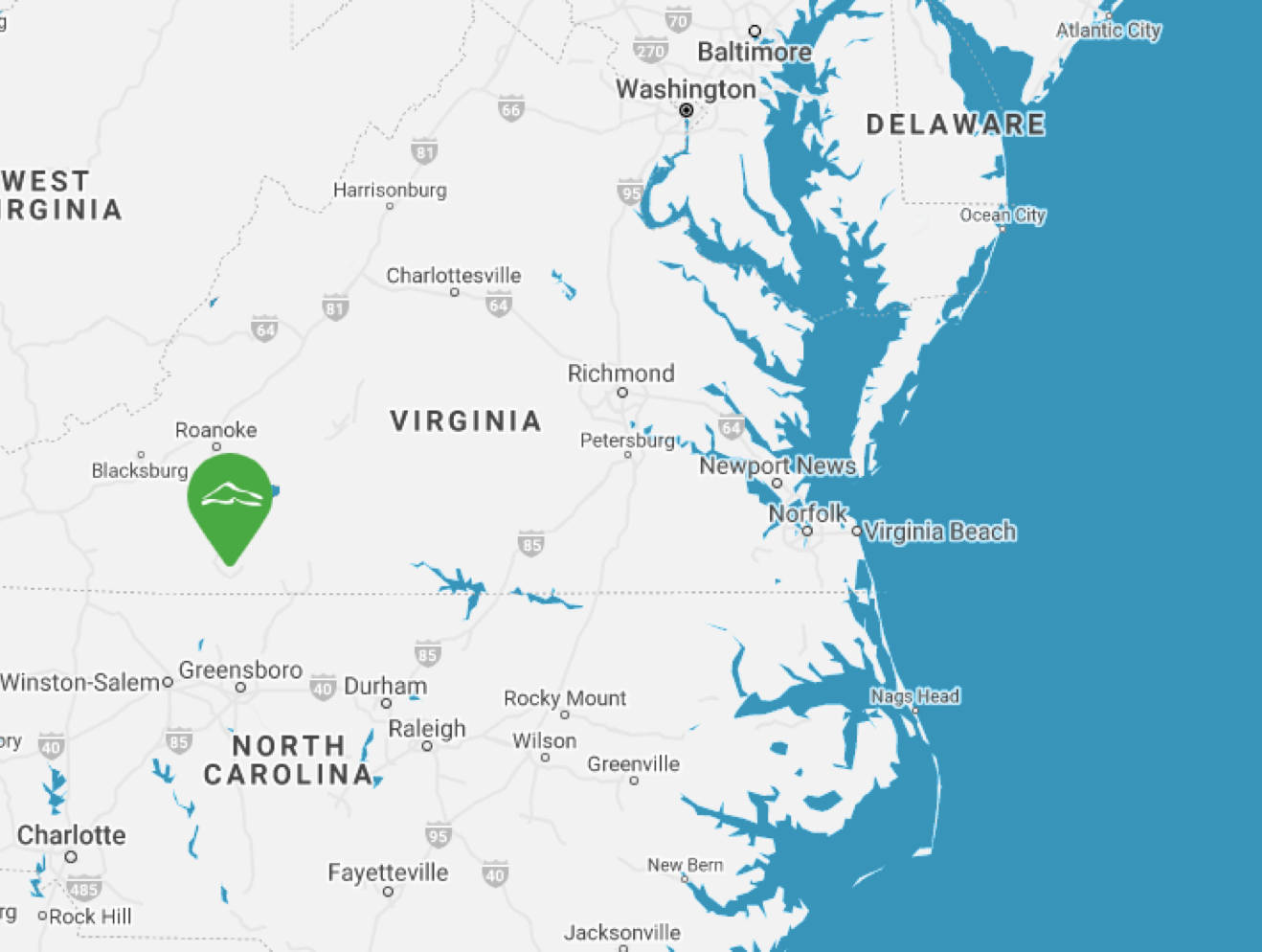
Southside Virginia: 276-634-4185 or discover@vmnh.virginia.gov
North-central North Carolina: 276-634-4185 or discover@vmnh.virginia.gov
Central Virginia: 276-634-4185 or discover@vmnh.virginia.gov
Eastern Virginia: 757-595-5225 or susan.walton@vmnh.virginia.gov
Programs
The museum offers a wide variety of SOL-based educational programming. Each program below is listed by title with a brief description and corresponding state standards. To learn about other programming opportunities not listed, or to discuss tailoring a program to meet your specific needs, please contact us at 276-634-4185 or discover@vmnh.virginia.gov.
SOL-Based Programming
Wild Weather
Pre-K-grade 1
What is weather? How does it affect us? Students will learn weather basics during a fun activity that focuses on wind.
Virginia: K.1; K.9; 1.7
North Carolina: K.E.1.2; K.E.1.3
Dinodays
Pre-K-grade 3
By taking a one day "trip" through time,
students will find out where plants and
animals fit into Earth's history.
Virginia : K.6; K.10; 1.1; 1.5; 2.1; 2.5; 3.4; 3.5; 3.10.
North Carolina: K.L.1.1; K.L.1.2; 1.L.1.1; 1.L.2.2
American Indians: Plains, Sioux, and Lakota
Grades Pre K-5
Using a tipi and a buffalo hide, students will discuss the importance of natural resources used by Indians. Program must be scheduled at museum. Activities adjusted according to grade level.
Virginia Social Science: K.2; 1.6; 2.2; 2.4; VS.2; USI.3
North Carolina Social Science: K.C.1.2; 1.C.1.2; 2.G.2.1; 3.G.1.3; 4.H.1.1; 4.C.1.1
To Be a Tree
Pre-K-4, LS, BIO
Explore the structure and function of a tree and how important light, water, and nutrients are for survival through Project Learning Tree® activities.
Virginia: K.1; K.6; K.7; K.9; 1.4; 1.7; 1.8; 2.1; 2.4; 2.5; 2.7; 2.8; 3.1; 3.6; 3.8; 3.10; 4.1; 4.4; 4.9; LS.7; BIO.8
North Carolina:K.L.1.1; 1.E.2.2; 1.L.1.1; 1.L.1.2; 1.L.1.3; 1.L.2.1; 3.L.2.1; 3.L.2.2; 3.L.2.3; 3.L.2.4
Exploring Nature
Pre K-Biology
Enjoy a unique experience in an outdoor, natural laboratory from terrestrial to aquatic ecology. These hands-on highly interactive programs can be customized for any age group and green space. Activities include: nature journaling, stream survey of macro invertebrates, GPS, map reading, unnatural trail hikes, web of life, nature bingo, or bug hunt. You can choose to have your programs take place in any green space in your community including: Philpott Dam, Fairy Stone State Park, Jack Dalton Park, Gravely Nature Preserve, Jaycee Park, Dana O. Baldwin Memorial Park, Frank Wilson Park, Beaver Creek Reservoir, or on the green spaces
or trails on your school campus! Virginia and North Carolina learning standards vary depending on the activities requested.
Water Fun
Kindergarten-grade 1
Students will discover different properties of water in this fun program.
Virginia: K.5
North Carolina: 1.E.2.1
Diving Into Oceans
Kindergarten-2
Take a journey to another world to explore the variety of ocean dwelling creatures and their unique characteristics, and how pollution affects this natural resource.
Virginia: K.1; K.6; K.7; 1.1; 1.5; 1.8; 2.1; 2.5
North Carolina: K.L.1.2; 1.L.2.1; 1.L.2.1; 1.L.2.2
Dinosaur Dig
Kindergarten-grade 3
Students pretend to be paleontologists during a mock dig for dinosaur "bones."
Virginia: K.1; K.2; K.6; K.10; 1.5; 2.1; 2.5; 2.7; 3.4; 3.5; 3.10
North Carolina: K.L.1.1; K.L.1.2; 1.L.1.1; 1.L.1.2
Ready to Recycle
Kindergarten-grade 3
Students listen to a story about "Henry the Heron" to discover the hazards of litter and play a matching game to learn about recycling.
Virginia: K.1; K.11; 1.1; 1.8; 2.1; 3.10
North Carolina: K.P.2.2
Awesome Autumn
Kindergarten-grade 4
Learn how plants and animals transform to prepare themselves for the cold winter months.
Virginia: K.1; K.6; K.7; K.9; 1.1; 1.5; 1.7; 2.1; 2.5; 2.7; 3.4; 3.5; 3.8
North Carolina: K.E.1.2; K.E.1.3; K.L.1.2; 1.L.2.2
Pondering Plants
Kindergarten-grade 4
Through lively skits students learn about the importance of plants and their plant parts, functions, and products.
Virginia: K.1; K.6; K.7; K.9; 1.1; 1.4; 1.7; 2.1; 2.4; 2.8; 3.8; 4.4; 4.5
North Carolina: 1.L.1.1; 1.L.1.2; 1.L.2.1; 3.L.2.1; 3.L.2.3
Marvelous Magnets
Kindergarten-grades 2, 4
Students conduct simple experiments involving magnetic fields, poles, attraction, and the uses of magnets.
Virginia: K.1; K.3; 2.1; 2.2
North Carolina: 1.P.1.2; 4.P.1.1
Animal Basics
Kindergarten-grade 4
This hands-on program helps students
understand that animals can be classified by their coverings or skin.
Virginia: K.1; K.2; K.4; 1.1; 1.4; 1.5; 1.7; 2.5; 2.7; 2.8; 3.1; 3.4
North Carolina: K.P.2.1; K.L.1.2
Bears in the Forest
Kindergarten-grade 4
Have fun learning about habitats and the life needs and characteristics of bears in this active role-play program adapted from Project WILD®.
Virginia: K.1; K.2; K.4; K.6; K.7; 1.1; 1.5; 1.7; 1.8; 2.1; 2.5; 2.7; 3.4; 3.5; 3.6; 4.8
North Carolina: K.L.1.1; K.L.1.2; 1.L.1.1; 1.L.1.2; 1.L.2.2; 4.L.1.1; 4.L.1.2
Eat Seeds? Who Me?
Kindergarten-grade 4
Students explore the important role seeds play in the food chain by dissecting a bean.
Adapted from Project WILD®.
Virginia: K.1; K.4; K.6; K.7; K.9; 1.1; 2.1; 2.4; 2.8; 3.8; 4.4; 4.9
North Carolina: K.L.1.2; 1.L.1.1; 1.L.1.2; 1.L.2.1; 3.L.2.1; 3.L.2.2; 3.L.2.3
Grow As We Go
Kindergarten-grade 4
Does the baby look like its mother? Life processes are illustrated through a game involving the life cycle of butterflies, ladybugs, frogs, birds, and fish. Adapted from Wild about Early Learners.
Virginia: K.1; K.6; K.7; K.9; 1.1; 1.5; 2.1; 2.4; 3.8
North Carolina: K.L.1.2; 2.L.1.1; 2.L.1.2; 2.L.2.1; 2.L.2.2
Eastern Woodland Indians
Kindergarten-grades 5, 8
Students will learn about the natural resources that Eastern Woodland Indians used in their daily activities. Students will examine artifacts and reproductions to get a glimpse of the lifestyles of Indians before colonization.
Virginia: 1.8; 3.10; 4.9
Virginia History/Social Science K.1; 1.6; 2.2; 2.4; 2.7; VS.1; VS.2; USI.3; WHI.2
North Carolina Social Science: K.C.1.2; 1.C.1.2; 2.G.2.1; 3.G.1.3; 4.H.1.1; 4.C.1.1
Beaks and Feet
Kindergarten-grade 4, LS
What are these feet good for? Can you eat with this beak? Look at several bird specimens to learn how these adaptations allow them to eat different types of food, or live in their habitats.
Virginia: K.1; K.2; K.6; K.7; 1.1; 1.5; 2.1; 2.5; 3.1; 3.4; 4.1; 4.5
North Carolina: K.L.1; K.L.2; 4.L.1
Forget-me-not!
Kindergarten-grade 4, LS
Students will address the effects and benefits of plants while observing their life without plants. For higher grade levels we will address a typical plant life cycle and why it is important for animals.
Virginia: 1.4; 2.1; 2.4; 3.1; 3.10; 3.11; 4.1; 4.4; 4.5; LS.4; LS.6; LS.9; LS.13
North Carolina: 1.L.1; 1.L.2.1; 3.L.2; 6.L.1.1; 6.L.1.2; 6.L.2.1
Crafty Environments
Kindergarten-grade 6
In this program, students will learn about
the items that contribute to polluting the
environment and why. Students will discover other uses for these items such a
s arts and crafts.
Virginia: K.11; 1.8; 3.10; 3.11; 4.9; 6.9
North Carolina: 1.L.1.3
Diver's City
Kindergarten-grade 6, LS, Bio
Students discover the causes and effects of diversity in a population while playing a fun interactive game involving their shoes and other fun materials.
Virginia: K.1; K.2; 1.1; 1.4; 2.1; 2.7; 3.1; 3.4; 3.6; 4.1; 4.4; 6.1; LS.4; LS.7; LS.8; LS.9; LS.12; LS.13; BIO.8
North Carolina: K.L.1.1; K.L.1.2; 1.L.2.1; 3.L.2.2; 4.L.1.3
A Weighty Matter
Kindergarten, 2-3, 5-6, Physical Science
Solids, liquid, and gas...is that all there is to matter? This sequel to our popular "It Matters" program provides further exploration of matter by focusing on
its measurement, composition, and
physical properties.
Virginia: K.4; 1.3; 2.3; 3.3; 5.4; 6.4; PS.2; Math: K.10; 2.17; 3.14; 5.11; 6.10
North Carolina: 2.P.2.1; 3.P.2.1; 3.P.2.2; 4.P.1.1; 5.P.2.2; 5.P.2.3; 6.P.2.1
Scientific Investigation
Kindergarten-8
Students investigate the components of experimental design in creative and fun ways. From honing observation and classification skills to data collection and analysis, activities are designed for age-appropriate exploration.
Virginia:K.1; 1.1; 2.1; 3.1; 4.1; 5.1; 6.1; LS.1; PS.1; ES.1; Math: K.10; 1.12, 2.23; 3.14; 3.21; 4.11; 5.11; 6.10
North Carolina Math: OIM.M.1.5
Water Cycle Voyage
Kindergarten-Life Science
Students will learn about the water cycle as they "become" water droplets in these highly interactive games designed by grade level.
Water is Music
Virginia: K.1; 1.1; 1.3; 1.8
North Carolina: 1.E.2.1
Incredible Journey
Virginia: 2.1; 2.3; 3.9
North Carolina: 5.P.2.1
The Exciting Life of Water
Virginia: 6.5; LS.7
North Carolina: 5.P.2.1
Light Science
Kindergarten - Physical Science
Students will explore the science of light, and learn about waves, reflection, refraction, shadows, and the color spectrum. Grade-level appropriate activities will be chosen to meet the
needs of your class.
Virginia: K.8; 1.1; 1.6; 2.1; 3.1; 4.1; 5.1; 5.3; 6.1; 6.3; PS.9
North Carolina: 4.P.3.1; 4.P.3.2; 6.P.1.1; 6.P.1.2
It's Good to be Different
Kindergarten-Life Science, Biology
One of these things is not like the other! Students identify the effects and importance of biological diversity in a population while playing a fun interactive game involving inexpensive common classroom materials.
Virginia: K.1; K.2; 1.1; 1.4; 2.1; 2.7; 3.1; 3.4; 3.6; 4.1; 4.5; 6.1; LS.5; LS.8; LS.9; LS.10; LS.13; LS.14; BIO.8
North Carolina: K.L.1.1; K.L.1.2; 1.L.1.1; 1.L.1.2
It Matters
Grades 1-2, 5
Students learn about the properties of solids, liquids, and gases through
hands-on experiments.
Virginia: 1.3; 2.3; 5.4
North Carolina: 2.P.2.1; 3.P.2.1; 3.P.2.2
Hooray for Habitats
Grades 1-2, 4-5
Discover the differences and similarities of the river and temperate forest habitats.
Virginia: 1.5; 2.5
North Carolina: 1.L.1.1; 4.L.1.3; 4.L.1.4
Sound Detectives
Grades 1, 2, 5, 6
Students investigate the world of sound by experiencing vibrations using various objects. Concepts include: motion of objects, vibration (first grade), frequency, waves, and wavelength (fifth grade).
Virginia: 1.1; 1.2; 5.1; 5.2
North Carolina: 2.P.1.1; 2.P.1.2; 4.P.3.1; 6.P.1.1
Rain Forest Resources
Grades 1-6
This program explores rainforest resources through a fun and active clue game.
Virginia: 1.8; 2.5; 2.8; 3.6; 3.10; 4.5
North Carolina: 4.L.1.1
Owl Pellets and Food Chains
Grades 1-6, LS
Learn about food chains first-hand by
dissecting owl pellets. Additional fee of
$2 per student.
Virginia: 1.5; 2.5; 3.4; 3.5; 4.5; LS.6; LS.7; LS.9
North Carolina: 1.L.1.1; 1.L.2.2
Rocks and Minerals Uncovered
Grades 1, 4-6, ES
Students will explore the bountiful resources of the Earth through rock and mineral samples.
Virginia: 1.8; 4.1; 4.9; 5.1; 5.7; 6.1; 6.2; 6.9; ES.5; ES.6; ES.7
North Carolina: 1.E.2.1
Fantastic Food Chains
Grades 1-7
Explore food chain basics and the
interconnections between organisms and the environment.
Virginia: 1.1; 1.5; 2.5; 2.8; 3.5; 3.10; 4.5; 6.9; LS.7; LS.11
North Carolina: 1.L.1.1; 1.L.2.2; 4.L.1.1; 4.L.1.2
Weather Wizards
Grades 2, 4, 5
What's the difference between a hurricane and a tornado? Students will learn what causes certain weather conditions and how they affect us.
Virginia: 2.6; 2.7; 4.6
North Carolina: K.E.1.2; K.E.1.3; 2.E.1.1; 2.E.1.2; 2.E.1.3; 2.E.1.4; 5.E.1.1; 5.E.1.2; 5.E.1.3
Re-use or Not? That is the Question
Grades 3, 6, Earth Science
Students will learn what materials are renewable and how to properly dispose renewable and nonrenewable materials, dramatically decreasing their ecological footprint.
Virginia: 3.11; 6.9; ES.6
North Carolina: 1.L.1.3; 4.L.1.3
Weathering and Erosion
Grades 2, 5
Students will explore the causes and the results of weathering and erosion. Explorations with soil, rock and water allow them to the view the effects that weathering and erosion have on plants, animals, and land forms.
Virginia: 2.7; 5.7
North Carolina: 4.E.2.3; 4.L.1.3
I Love Oobleck
Grades 2, 5-8, PS
Students practice measuring skills by exploring and creating a mystery substance to test their observation skills and investigate the states of matter. If your group is already familiar with Oobleck, this program can be adjusted to include inquiry-based explorations on the mysterious goo.
Virginia: 2.1; 2.3; 5.4; 6.1; 6.4; PS.1; PS.2
Virginia Math: 5.11; 6.10
North Carolina: 2.P.2.1; 3.P.2.2; 6.P.2.2; 6.P.2.3; 8.P.1.3; PSc.2.1.2
I-mail: Messages about Insects
Grades 2-7
Students will explore the world of insects as they learn about life cycles, food webs, adaptations, and interdependencies.
Virginia: 2.4; 2.5; 3.4; 3.5; 3.6; 3.8; 3.10; 4.5; 4.9; 5.5; 6.9; LS.4; LS.7; LS.8; LS.9
North Carolina: 2.L.1.1, 2.L.1.2, 2.L.2.1, 2.L.2.2, 4.L.1.1, 4.L.1.2, 4.L.1.4
What Do Trees Need?
Grades 2-4, LS, BIO
In this active program, students will become trees and compete for their essential needs. Students will also learn how environmental impacts, such as drought, will affect the tree's growth.
Virginia: 2.1; 2.4; 2.5; 2.7; 2.8; 3.1; 3.6; 3.8; 3.10; 4.1; 4.4; 4.9
North Carolina: 3.L.2.1, 3.L.2.2, 3.L.2.3, 3.L.2.4, 4.L.1.1
Photosynthesize This!
Grades 2-6, LS, BIO, ENV
Students will explore the world of plants, define their parts and functions, and learn to use a dichotomous key. They will identify some local trees and play a relay game to test their knowledge.
Virginia: 2.1; 2.4; 2.8; 3.1; 3.6; 3.10; 4.1; 4.4; 4.9; 5.1; LS.4; LS.5
North Carolina: 3.L.2.1, 3.L.2.2, 3.L.2.3, 3.L.2.4, 4.L.1.1, 5.L.2.3, 6.L.1.1, 6.L.1.2, Bio.2.1.1, Bio.2.1.2
Thinking Inside the Box:
Designing Plant Packages
Master the design challenges that packaging provides by solving a unique packaging challenge.
Virginia: 4.4
North Carolina: 3.L.2.1, 3.L.2.2
Now You See Me, Now You Don't
Grades 3-4, LS
Students learn about the benefits of
camouflage and make their own camouflage. By observing numerous animals and their defense mechanisms, students will learn that each species has special adaptations to survive in their environment.
Virginia: 3.4; 3.5; 4.1; 4.5; LS.8; LS.9
North Carolina: 4.L.1.2, 4.L.1.4, 5.L.2.3
Catching the Wind
Discover the importance of wind energy and create your own "wind-catching" machine.
Virginia: 3.1, 3.3, 3.11, 4.1, 4.2, 5.1
Virginia Science SOL-S.O.S.!
Grades 3, 5
Want to do something different with your students as SOL tests approach? This fast paced, highly interactive, and engaging program addresses key science concepts and principles. Third grade and fifth grade version available.
Taking the Plunge: Designing Submersibles
Grades 3-5
Explore the ocean and apply floating and sinking concepts to create a submersible.
Virginia: 3.1, 3.6, 4.1, 4.5, 5.1, 5.4, 5.6; History/Social Science: 3.4, 3.5; Computer-Technology: C/T 3 - 5.3, C/T 3 - 5.5, C/T 3 - 5.7
North Carolina: EX.3.P.2.2, 5.L.2.1, 6.P.2.3, EX.6.P.2.2; Social Studies: 3.C&G.2.2, EX.5.G.1.2, EX.5.G.1.3
A Slick Solution: Cleaning an Oil Spill
Grades 3-6
Solve the challenge of cleaning an oil
spill and discover the consequences
of pollution.
Virginia: 3.5; 3.6; 3.9; 3.10; 4.5; 4.9; 6.5; 6.7; 6.9
North Carolina: 4.L.1.1; 5.L.2.1; 5.L.2.3
A Stick in the Mud:
Evaluating a Landscape
Grades 3-6
Explore the processes and factors that influence design construction.
Virginia Science: 3.1, 3.7, 3.10, 4.1, 5.1, 5.7, 6.1; History/Social Science: CE.1; Computer-Technology: C/T 3-5.3, C/T 3-5.7,
North Carolina: EX.3.L.2.3, 4.L.1.3, 6.P.1.1, 6.E.1.1, 6.E.1.2, 6.E.1.4; Social Studies: 3.G.1.3, 3.C&G.2.2, EX.5.G.1.2, EX.5.G.1.3
Ocean Connections
Grades 3-6
Students will learn about producers and
consumers from four marine ecosystems and about the delicate balance among the organisms in each environment.
Virginia: 3.4; 3.5; 3.6; 3.10; 4.5; 5.6
North Carolina: 4.L.1.2; 5.L.2.1; 5.L.2.2; 5.L.2.3
As the World Rotates and Revolves
Grades 3-4, 6
Create and describe a model of the Earth, moon, and sun system with approximate scaled distances and sizes.
Virginia: 3.8; 4.1; 4.7; 6.8
North Carolina: 3.P.1.3, 3.E.1.1, 3.E.1.2, 4.E.1.1, 4.E.1.2, 6.E.1.1
Digging In
Grades 3-6, ES
Students may get a little dirty while exploring the components of soil, its origin, and its importance as a Virginia natural resource.
Virginia: 3.1; 3.7; 3.10; 4.1; 4.9; 5.1; 5.7; ES.8
North Carolina: 3.L.2.4, 6.E.2.4
Hooks and Ladders
Grades 3-6, LS, BIO
Investigate the life cycle of Brown Trout featured in the Trout in the Classroom museum tank through this highly active game. Adapted from a Project Aquatic Wild® activity.
Virginia: 3.1; 3.4; 3.5; 3.6; 3.8; 3.9; 4.1; 4.5; 4.9; 6.5; 6.7; 6.9; LS.4; LS.8; LS.9; LS.10; LS.12; BIO.9
North Carolina: 4.L.1.1, 4.L.1.2, 4.L.1.3, 8.E.1.1, 8.L.3.1, 8.L.3.2, Bio.2.1.2, Bio.2.2.1, Bio.2.2.2, EEn.2.4.2
Backboned Seven: Vertebrates of Virginia
Grades 3-7
The seven classes of vertebrates are brought to life in this program through pictures, various specimens, and hands-on activities.
Virginia: 3.4; 3.5; 3.6; 4.5; 4.9; 5.5; LS.4; LS.7
North Carolina: 4.E.2.2
Species Feud
Grades 3-7
Students test their knowledge of Virginia's endangered species through this nationally acclaimed program presented in an exciting game show format.
Virginia: 3.4; 3.6; 3.10; 4.5; 4.9; 6.9; LS.4; LS.9
North Carolina: 4.L.1.1, 4.L.1.3, 5.L.2.3
Getting to Know Your Watershed
Grades 3-ES
Students explore the importance of watershed health and the effects of erosion with hands-on outdoor activities and games.
Virginia: 3.7; 3.9; 3.10; 4.5; 4.9; 5.7; 6.5; 6.7; ES.8
North Carolina: 4.L.1.1, 4.L.1.2, 4.L.1.3, 6.E.2.4, 8.E.1.1, 8.L.3.1, 8.L.3.2, Bio.2.1.2, Bio.2.2.1, Bio.2.2.2, EEn.2.1, EEn.2.4.2
Rooting for Trees!
Grades 3-Earth Science
Ever wonder what trees are in your community? How big they are? How old they are? By getting to know the green space in the area of your choosing, students will learn how to identify trees using guide books, its location by using GPS units, and use geometry to find the diameter and the height of the trees
they identify.
Virginia: 3.1; 4.1; 4.4; 4.5; 5.1; 6.1; LS.5
Virginia Math: 3.7; 3.14; 4.11; 4.13; 5.9; 5.11; 5.14; 6.9; 6.12; 6.13; 8.16
North Carolina: 6.L.1.1, 6.L.1.2
Orienteering
Grades 3-WG
Students explore various types and features of maps, and then learn to use a compass and GPS.
Virginia: 3.1; 4.1; 5.1; 6.1; ES.1; ES.3; Computer /Technology: 3-5.2; 6-8.6; 6-8.8; History and Social Science: 3.5; 3.6; US1.1; US1.2; US11.1; WG.1; Physical Education: 7.1; 8.2
North Carolina: ??
Virginia Stream Life
Grades 3-LS
Students will discover what lives in Virginia's streams by searching for macro invertebrates and examining aquatic microorganisms. They will play an active game to help them understand how species can be water quality indicators.
Virginia: 3.5; 3.6; 3.9; 3.10; 4.5; 4.9; 6.7; LS.7; LS.8; LS.9; LS.11
North Carolina: 4.L.1.1; 4.L.1.2; 5.L.2.1; 5.L.2.2; 5.L.2.3; 8.L.3.2; BIO.2.1.1; BIO.2.1.3; EEn.2.4.1; EEn.2.4.2
Genes - Always in Style
Grades 3 - Biology
Through several hands-on activities, students will explore inheritance, genes, and DNA. They will investigate how species and populations change over time, and how traits of organisms allow them to survive in their environments.
Virginia: 3.4; 4.5; 5.5; LS.9; LS.10; LS.11; LS.12; LS.13; BIO.5; BIO.7
North Carolina: 4.L.1.4; 5.L.3.2; 7.L.2.2; 8.L.4.2; BIO.3.1.1; BIO.3.1.2
Speedy Building
Grades 3-8
Students will use Legos©, axles and wheels to build cars to race to explore motion, friction, energy, and simple machines. They will measure distance and time traveled, and will construct
a graph to understand how to
calculate speed.
Virginia: 3.1; 3.2; 4.1; 4.2; 6.1; 6.2; PS.1; PS.6; PS.10; Math: 4.14; 5.2; 5.4; 6.6
North Carolina: 3.P.1.1; 3.P.1.2; 5.P.1.1; 5.P.1.2; 5.P.1.3; 5.P.1.4; 7.P.1.1; 7.P.1.1; 7.P.1.2; 7.P.1.3; 7.P.1.4; 7.P.2.1; 7.P.2.2; 7.P.2.3; 7.P.2.4; Math: 0IM.A.2.2; 0IM.A.2
Solid as a Rock: Replicating an artifact
Grades 4, 5, ES
Create an artifact by applying your knowledge of the properties of rocks.
Virginia: 4.9; 5.7; ES.4; ES.5; ES.9?North Carolina: 4.P.2.2; 4.P.2.3
We're All in a Watershed
Grades 4-6
This program incorporates an interactive watershed model to illustrate the
basic properties and characteristics of watersheds.
Virginia: 4.1; 4.5; 4.9; 6.1; 6.5; 6.7; 6.9
North Carolina: 4.L.1.3
What a Shock!
Grades 4, 6, Physical Science
Discover the components of electricity. Concepts explored are conductors, insulators, circuits, electrical energy, static and current electricity.
Virginia: 4.3; 6.2; PS.6; PS.11
North Carolina: 4.P.3.1; 7.P.2.3; PSc.3.3.1; PSc.3.3.2
Future Forecasters
Grades 4-9
Students discover the science that allows people to predict the weather through hands-on experiments and data collection.
Virginia: 4.1; 4.6; 5.1; 6.1; 6.3; 6.6; PS.7; ES.1; ES.12; Computer-Technology: 3-5.6; 6-8.6; 6-8.8
North Carolina: 5.E.1.1; 5.E.1.2; 5.E.1.3; 7.E.1.3; 7.E.1.4; 7.E.1.5
Discovering Fossils
Grades 4-ES
In this program, students will touch
fossils from different geological periods and learn how fossils are formed.
Virginia: 4.1; 4.5; 5.1; 5.7; LS.13; ES.9
North Carolina: 4.E.2.1; 4.E.2.2; 8.E.2.1; 8.E.2.2
Stream Study
Grades 4-BIO
Students become stream scientists in this activity as they learn how to test water quality and understand how water chemistry affects organisms that live in our rivers and streams.
Virginia: 4.1; 4.5; 4.9; 5.1; 6.1; 6.5; 6.7; 6.9; LS.1; ES.8; BIO.1; BIO.2; BIO.8
Virginia Computer-Technology: 6-8.6
North Carolina: 6.L.2.3; 8.E.1.2; 8.E.1.3; 8.E.1.4
Ready, Set, React!
Grades 5, 6, Physical Science
How are physical changes different from chemical changes? What happens when an acid and a base combine? Explore the causes of chemical reactions in everyday life. Kid-tested and goggles are required!
Virginia: 5.4; 6.4; PS.2; PS.5;
North Carolina: 8.P.1.3; PSc.2.1.1; PSc.2.1.3
The Nature of Genetics
Grades 5-7, LS. Bio
Identify variation of a species in J. Frank Wilson Park and compare it to the species in another environment. Discover what makes them different and why. Students will address the general concepts of genetics, variation, and natural selection using examples of nature.
Virginia: 5.1; 5.5; 6.1; LS.2; LS.5; LS>13; BIO.1; BIO.2; BIO.6
North Carolina: 4.L.1.1; 8.L.4.2; BIO.2.1.3; BIO.3.4.2
Shake, Rattle, and Roll
Grades 5-9
Learn all about earthquakes, volcanoes, plate tectonics, and seismology in this program. Students will create a working seismograph and see real data from different locations on the Earth.
Virginia: 5.7; ES.1; ES.7
North Carolina: 6.E.2.2; EEn.2.1.1; EEn.2.1.2; EEn.2.1.4
Kingdoms and Keys
Grade 5, BIO, AP BIO
By exploring the characteristics of the five kingdoms, students will discover how scientists classify living things.
Virginia: 5.1; 5.5; LS.4; BIO.6
North Carolina: ???
Cellular Connection
Grades 5-Biology
In this program, students will get an up-close look at the basic unit of life: the cell. Using microscopes and hands-on activities, they will compare plant and animal cells, identify the parts and structure, and learn how cells divide.
Virginia: 5.1; 5.5; 6.1; LS.1; LS.2; LS.3; BIO.1; BIO.2; BIO.3
North Carolina: 7.L.1.2; BIO.1.1.1
Atomic Attraction
Grades 5-Physical Science
Atoms and elements, molecules and compounds, electrons and protons- this program will bring your students to the atomic level of chemistry. Prepare for some mixing, bubbling, and bonding as we create quite a reaction!
Virginia: 5.4; 6.4; PS.2; PS.3; PS.4
North Carolina: 6.P.2.1; 8.P.1.1; PSc.2.1.1
Layers from the Past
Grades 5-Earth Science
Students will take a simulation core sample from the ocean floor to learn about how the earth and life on it have changed through time. They will practice problem solving, view microfossils, and explore the field of engineering.
Virginia: 5.1; 5.5; 5.6; 5.7; 6.1; LS.1; LS.10; LS.13; ES.1; ES.2; ES.9; ES.10
North Carolina: 8.E.2.1; 8.E.2.2
Power of Nature
Grades 6-9, ES
Explore severe weather conditions and natural disasters such as volcanoes, tornadoes, and hurricanes through a Jeopardy-style game.
Virginia: 6.3; 6.6; ES.12
North Carolina: 7.E.1.3; EEn.2.1.1; EEn.2.1.2; EEn.2.1.4
Air Dynamics
Grades 6-ES
Students will do experiments to learn all about our air. They will explore atmospheric properties, air quality, and air pollution.
Virginia: 6.3; 6.6; LS.11; PS.7; ES.11
North Carolina: 7.E.1.1; EEn.2.5.1; EEn.2.5.5
Rain Forest Quest
Grade 7, BIO
Students will explore how plants defend themselves against insects and why some of these defenses are valuable to people.
Virginia: LS.9; LS.10; BIO.8; BIO.7
North Carolina: BIO.2.1.2; BIO.2.2.2