Hours & Admissions
 Directions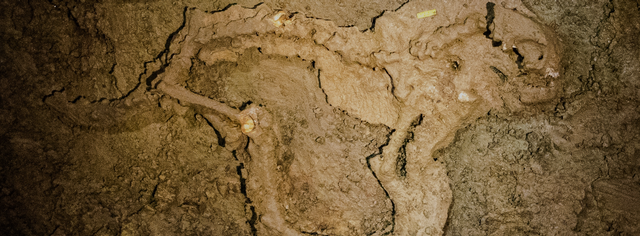
The museum is home to the incredibly well-preserved fossil remains of an ancient cat extracted from deep within a cave in western Virginia in late 2021. Affectionately named Petra (derived from the Greek word "petros", meaning rock or stone), the skeleton laid undisturbed for many centuries until a field crew of nearly a dozen experts - led by former Virginia Museum of Natural History Assistant Curator of Paleontology (and current Fitzpatrick Chair of Paleontology at the Science Museum of Minnesota) Dr. Alex Hastings - extracted the fossil remains and successfully transported the specimens to their new home here at VMNH.

VMNH Paleontology Research Technician Lucy Treado with Petra's skull under the microscope
Recognized as one of Virginia's top ten endangered artifacts by the Virginia Association of Museums, the museum's paleontology team has spent the past several years meticulously preparing the fossil remains for public exhibition, and in an effort to determine the exact species that Petra belongs to and the time period in which Petra lived.
Initial theories have ranged from Petra being an ancient cougar to the possibility of it being an American cheetah (Miracinonyx inexpectatus), an extinct species that lived during the Pleistocene epoch, which ended approximately 11,700 years ago with the end of the last Ice Age.
Though the mystery surrounding Petra has yet to be solved, researchers are getting closer to solving the puzzle every day!
* Header photo of Petra is courtesy of Katarina Kosic Ficco, Virginia Department of Conservation and Recreation, Division of Natural Heritage, Karst program