Hours & Admissions
 Directions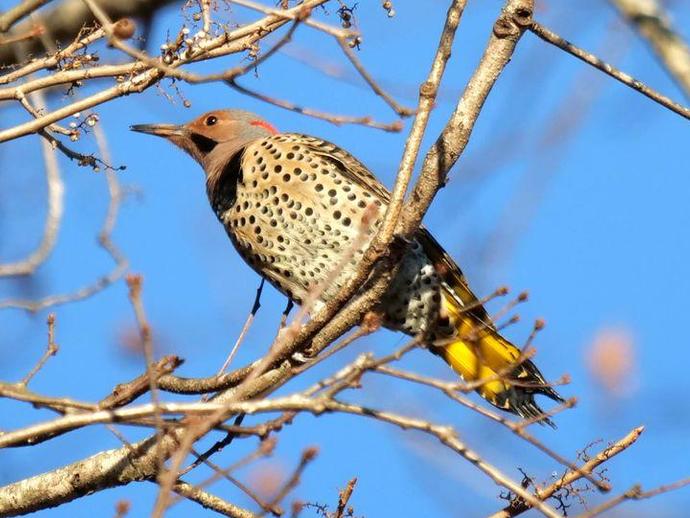
January 3, 2022
Happy New Year, nature fans! It's time for the Monday edition of #BenInNature presented by our friends at Carter Bank & Trust!
Let's ring in 2021 with one of my favorite birds, the northern flicker (Colaptes auratus).
The northern flicker is one of the most beautiful woodpeckers we have in Virginia, and it's also a bit unusual compared to the other woodpeckers we have in the Commonwealth. They're the only woodpeckers that frequently feed on the ground, and they also will sometimes catch insects in flight. They do eat fruits and seeds, but insects make up the bulk of their diet; in fact, nearly half of their diet often consists of just ants. Flickers even exhibit a behavior known as "anting" in which they use the formic acid from ants when preening their feathers. The acid helps keep the feathers free of parasites!
Northern flickers are also a great asset to farmers. They're natural predators of the European corn borer (Ostrinia nubilalis), a moth that's a major pest of corn and other grains. These moths cost the U.S. agriculture industry about $1 billion per year in losses, so anyone with a corn field should celebrate visits from northern flickers.
If you'd like to spot a northern flicker, keep an eye peeled in open habitats near trees, such as woodland edges, yards, and parks. They can be found year-round here in Virginia.
ABOUT #BenInNature
Social distancing can be difficult, but it presents a great opportunity to become reacquainted with nature. In this series of posts, Administrator of Science Ben Williams ventures outdoors to record a snapshot of the unique sights that can be found in the natural world. New updates are posted Monday - Friday, with previous posts highlighted on the weekends. This series of posts is made possible thanks to the support of VMNH Corporate Partner Carter Bank & Trust (www.cbtcares.com).
NATURE PHOTO IDENTIFICATIONS
If you discover something in nature that you would like help identifying, be sure to message us right here on Facebook with a picture (please include location and date of picture) and we'll have our experts help you identify it!